
The Reserve Bank of India (RBI) will launch the Unified Lending Interface (ULI) nationwide in due course, aiming to transform India's lending sector, similar to how the Unified Payments Interface (UPI) revolutionised the payments ecosystem, Governor Shaktikanta Das said on Monday.
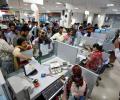
'The reason is that you may not enter the branch but you want to see it near you as it establishes trust.'

President Droupadi Murmu, in her address to the nation on Republic Day, advocated for the "One Nation One Election" initiative, emphasizing its potential to enhance governance and reduce financial burdens. She highlighted the government's efforts to eliminate remnants of colonialism, citing the replacement of British-era criminal laws with modern alternatives. Murmu also lauded India's economic progress, stressing the importance of inclusive growth and social welfare. She urged citizens to remember the sacrifices of freedom fighters and reaffirmed the significance of the Constitution in guiding India's journey towards a prosperous and equitable future.

Errors in filing income-tax returns frequently lead to scrutiny notices, additional liabilities, or delayed refunds.

The pilot project for central bank digital currency (CBDC) in the retail segment went live on Thursday with the Reserve Bank of India (RBI) issuing Rs 1.71 crore to four participating banks based on their indents. The central bank has identified four banks for the first phase of the pilot - State Bank of India, ICICI Bank, Yes Bank and IDFC First Bank - in four cities, Mumbai, New Delhi, Bengaluru and Bhubaneswar. The highest indent was received from one private sector bank.

The IPPB, which is currently running pilot services in Raipur and Ranchi, needs a go-ahead from RBI for the software used for system integration

The net direct tax collection so far this fiscal rose 19.41 per cent to Rs 14.70 lakh crore, reaching about 81 per cent of the full-year target, the income tax department said on Thursday. "The provisional figures of Direct Tax collections up to January 10, 2024, continue to register steady growth," the Central Board of Direct Taxes (CBDT) said in a statement. Direct Tax collection, net of refunds, stood at Rs 14.70 lakh crore which is 19.41 per cent higher than the net collection for the corresponding period of last year.

Ahead of the first due date of advance tax payment on June 15, the government is likely to release guidelines on what will be covered within the ambit of virtual digital assets (VDA). To remove any ambiguity in the recently established tax framework for asset holders, the Central Board of Direct Taxes (CBDT) is currently preparing guidelines, said government officials in the know. The apex direct tax body will define non-fungible tokens (NFTs) and whether or not they fall within the purview of VDA.
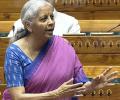
The Lok Sabha on Tuesday passed the Finance Bill 2025, along with 35 government amendments, including one that abolishes a 6 per cent digital tax on online advertisements.

Taking lessons from that, I would think seamless digital payments is something you have to clearly have a roadmap for, the FM said.

'My life has been quite difficult. I felt I could see it in words. I thought if everyone else can write, then I can too.'

Ride-hailing platform Uber on Wednesday said it is recruiting close to 250 engineers for its teams in Bengaluru and Hyderabad as it continues to expand the scope of operations for its engineering and product work in the country. The current round of hiring will strengthen the company's rider and driver growth, delivery, eats, digital payments, risk and compliance, marketplace, customer obsession, infrastructure, adtech, data, safety and finance technology teams, a statement said. These roles are currently split between the company's Hyderabad and Bengaluru tech centres, it added.
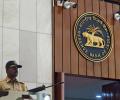
The Reserve Bank on Tuesday directed digital lending entities to disclose upfront the names of of their empanelled agents authorised to contact borrowers in case of default of loan, and also intimate the details to customers before initiating the recovery process. In August last year, the RBI had tightened norms for digital lending to prevent charging of exorbitant interest rates by certain entities and also check unethical loan recovery practices. Under the new norms, all loan disbursals and repayments are required to be executed only between the bank accounts of borrower and the regulated entities (like banks and NBFCs) without any pass-through/ pool account of the Lending Service Providers (LSPs).

'Today, the State looks at everyone with suspicion.'

The key components of the Ayushman Bharat Digital Mission include a health ID for every citizen that will also work as their health account, to which personal health records can be linked and viewed with the help of a mobile application, a Healthcare Professionals Registry (HPR) and Healthcare Facilities Registries (HFR) that will act as a repository of all healthcare providers across both modern and traditional systems of medicine.

The Reserve Bank of India on Friday permitted banks to increase charges on ATM cash withdrawals beyond the mandatory free monthly usage by Rs 2 to Rs 23 per transaction from May 1.

'That way you're not hostage just to US sort of exports to India.'

Now, 83 per cent males and 77 per cent females have formal bank accounts but they are hardly using them
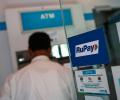
RuPay National Common Mobility Card's offline wallet can be used to make ticket payments in transit, including in metros, cabs, etc, enabling automatic, quick, cashless payments.

Having issued over 21 lakh cards since lifting of curbs last year, the country's largest private sector lender HDFC Bank is planning to launch a slew of digital initiatives over the next few quarters, a top official said. The Reserve Bank had barred HDFC Bank from issuing new credit cards following incidents of outages in the lender's internet banking /mobile banking/ payment utilities over the previous two years. The curbs were partially lifted after eight months in August last year. Finally, in March 2022, the RBI lifted all restrictions placed on the bank, including digital launches.

Reserve Bank of India (RBI) Governor Shaktikanta Das said on Friday said the central bank has developed an innovative artificial intelligence and machine learning (AI/ML) based model MuleHunter.ai to address the growing issue of mule bank accounts that are often used for committing financial fraud. Developed by the Reserve Bank Innovation Hub, the new initiative is piloted with two public sector banks.

The Reserve Bank of India's (RBI's) recent decision to allow credit cards for payments through the Unified Payments Interface (UPI) is likely to attract a merchant discount rate (MDR), said a top payment industry source. For smaller merchants, a subsidy for MDR could be provided. "With credit card-UPI linkage, UPI will not only be a payment instrument but also a lending platform. "How can banks lend without a commercial model? Also, the government has said MDR will be zero for payment products but not for lending products," the source said, indicating the MDR regime for credit card-linked UPI payments.

The ministry will engage 30 young graduates, postgraduates and PhD-holders in the fields of urban planning, urban design, engineering, information and technology, urban mobility, finance, social sector, and environmental issues.

'Compare the new slabs with the previous years to understand if your tax liability will increase or decrease after the Budget.'

With rising disposable incomes in cities beyond metros, the penetration of credit cards - and consequently, credit card spending - is growing at a much faster pace than in traditional metro cities, primarily driven by e-commerce spending.

The size of the Indian financial services market could touch around $340 billion in the next few years.

Indian startups raised a total of $1.65 billion (about Rs 14,418 crore) in funding at a median valuation of $83.2 million in February 2025, according to data from Traxcn. This brings the total funding in FY25 (April-February) to $25.4 billion, spread across 2,200 rounds, the data showed.

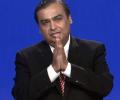
Reliance Industries Ltd (RIL) chairman Mukesh D Ambani on Wednesday said the latest reforms and relief measures will enable the telecom sector to achieve goals set under the Digital India mission. The Cabinet has announced several reforms for the telecom sector, including redefining adjusted gross revenue (AGR) that will now include revenues earned only from telecom services. The government calculates various levies on AGR. "The telecom sector is one of the prime movers of the economy and the key enabler for making India a Digital Society, I welcome the Government of India's announcement of reforms and relief measures that will enable the industry to achieve the goals of Digital India. I thank Prime Minister (Narendra Modi) for this bold initiative," Ambani said.

Unified Payments Interface (UPI) transactions saw an 8 per cent month-on-month increase in volume to 16.73 billion in December, the highest volume for the digital system since it became operational in April 2016. The value also increased by 8 per cent to Rs 23.25 trillion, up from Rs 21.55 trillion in November.

There has been a 45 per cent growth in 'active internet users' in rural India since 2019, according a study by Nielsen, a global company for audience measurement, data and analytics. The Bharat 2.0 Internet report said that female active internet users grew by 61 per cent since 2019. The report said that India has 646 million active Internet users aged 2 years and above as of December 2021. Rural India has 352 million internet users--almost 20 per cent higher than urban.

Google on Friday said it is deferring the deadline for developers in India to integrate with its Play billing system from March 2022 to October next year. In October last year, the company had announced March 31, 2022 as the deadline for developers in India to integrate with Play's billing system. A Google spokesperson on Friday said the extension has been done in view of the changes to India's recurring digital payments guidelines.

Digital-pay companies see 10x growth spurt after demonetisation, report Ayan Pramanik & Shine Jacob/Business Standard from Bengaluru.

Aided by robust demand, automobile retail sales in India rose by 11 per cent last year as compared to 2022, dealers' body FADA said on Monday. The overall domestic automobile retail sales stood at 2,38,67,990 units in the 2023 calendar year as compared to 2,14,92,324 units in 2022. Passenger vehicle sales stood at 38,60,268 units last year, up 11 per cent from 34,89,953 units in 2022.

Ask rediffGURU and PF and MF expert Janak Patel your mutual fund and personal finance-related questions.
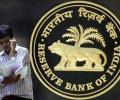
The Reserve Bank of India (RBI) has recognised the Fintech Association for Consumer Empowerment (FACE) as a self-regulatory organisation (SRO) in the fintech sector, the central bank announced on Wednesday. The banking regulator received three applications for fintech SRO. Of the remaining two applications, one has been returned by the RBI with a provision for resubmission after meeting specific requirements, while the third application is still under examination, said Governor Shaktikanta Das at the Global Fintech Fest in Mumbai.

Fintech firm BharatPe is targeting an initial public offering (IPO) in the next 18-24 months with the company expecting profitability at an earnings before interest, taxes, depreciation and ammotisation (Ebitda) level for FY25, chief executive officer (CEO) Nalin Negi said.

Bharti Airtel on Wednesday announced a new corporate structure to sharpen the company's focus on rapidly unfolding digital opportunities while enabling it to unlock value. The move comes at a time when digital is turning out to be a compelling proposition for players in the Indian market, where the use of smartphones and better broadband connectivity has spurred the adoption of a new range of services. Players are positioning themselves beyond the core telephony offerings, as they enhance digital engagement, build future streams of revenue and create brand differentiation, besides redefining themselves as a larger platform of digital services, say market watchers.

Net direct tax collection grew 13.13 per cent to over Rs 21.26 lakh crore so far this fiscal aided by by higher advance tax mop up, government data showed on Monday. During the year, the government collected Rs 10.44 lakh crore from four instalments of advance tax as against Rs 9.11 lakh crore in the previous fiscal, registering a growth of 14.62 per cent.

Technology is rapidly reshaping industries that have long been rooted in tradition, driving a wave of innovation that is transforming everything from finance, banking, steel to manufacturing.
